
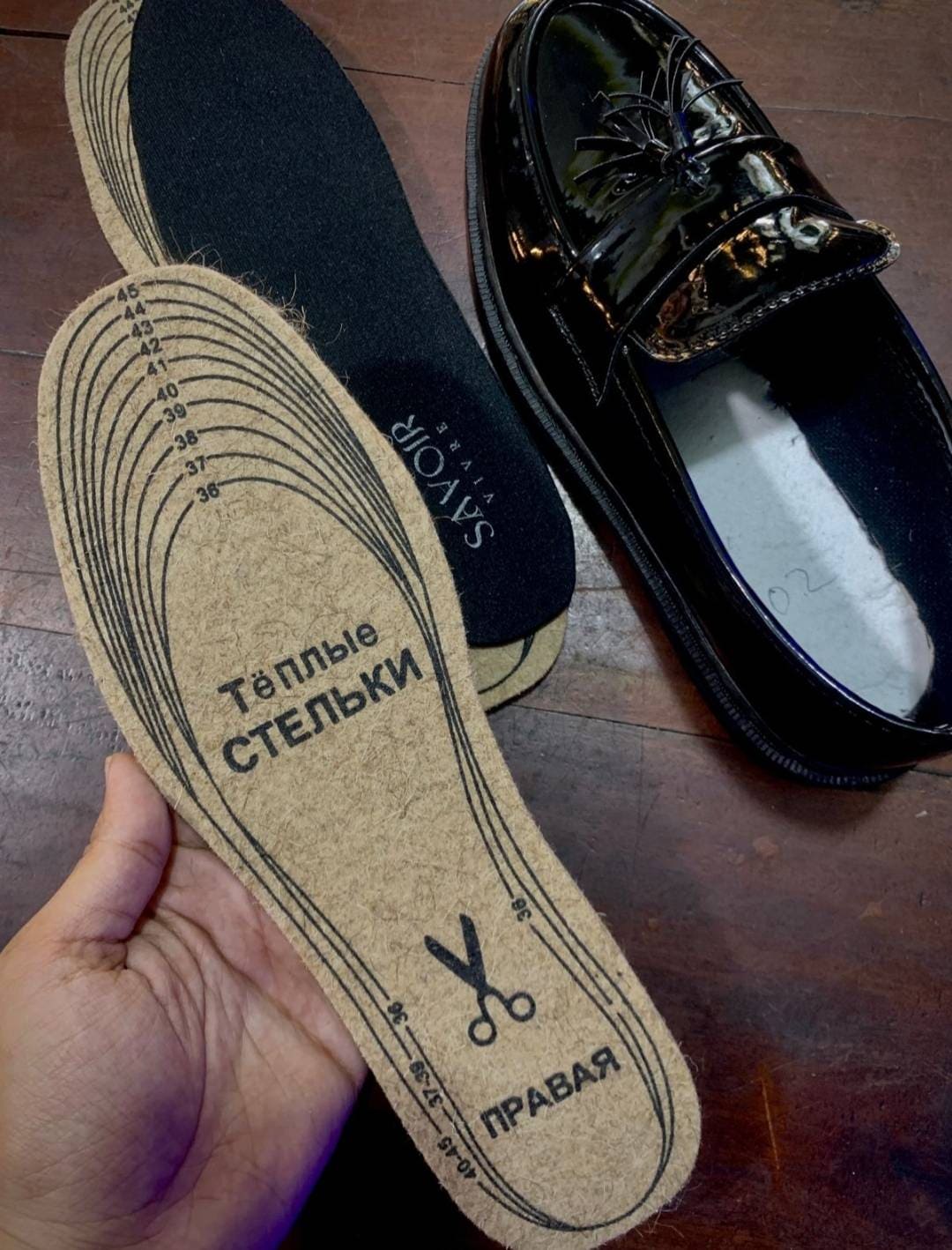
The quality of a shoe’s materials is one of the primary factors for those seeking comfort. Among its components, the insole plays an essential role in supporting the foot and providing cushioning for the arch, thereby reducing fatigue and discomfort during prolonged use.
In the footwear manufacturing industry, most shoe producers rely on synthetic plastic foams like Ethylene-Vinyl Acetate (EVA) and Polyurethane (PU) due to their lower cost. However, a global shift toward eco-friendly products is encouraging manufacturers to adopt coco fiber insoles as a green alternative.
Upcycling agricultural waste into high-performing raw materials is now a global priority. Coco fiber serves as an eco-friendly, strong, and durable material for shoe soles, significantly reducing carbon footprints compared to synthetic plastics.
Why Choose Coco Fiber Insoles?
Coco fiber is produced by processing or defibering coconut husks into long, golden-brown strands resembling coarse hair. While widely popular as a growing medium in agriculture, this natural fiber is also used for handicraft materials, natural soundproofing, and eco-friendly components in the footwear and textile sectors.
There are several advantages of coco fiber insole material for footwear applications:
- Natural Antimicrobial & Structural Resilience
Beyond its natural antimicrobial properties, coco fiber stands out as a high-performance material recognized by the Food and Agriculture Organization (FAO). Coconut fiber contains natural lignin (>40%) and tannins, which naturally inhibit the growth of bacteria and fungi.
This advantage helps prevent foot odor (Bromhidrosis) without relying on synthetic chemicals, ensuring coco fiber insoles naturally resist odor buildup and stay fresh. Coir provides exceptional structural integrity, high tensile strength, and impressive total elongation of up to 51%, making it highly resilient against daily mechanical wear. - Advanced Breathability & Moisture Management
Coco fiber features an open 3D porous matrix that allows smooth air circulation, quickly evaporates sweat, and keeps the inside of the shoe cool and dry. In addition, this design prevents a stuffy feel, enhances overall foot comfort in coco fiber insoles, and helps to prevent unpleasant odors caused by moisture buildup. - Long-Term Shape Retention
When processed through needle-punching or rubberized coir methods, coco fiber can develop strong structural properties that support long-term shape retention and springiness. This allows coco fiber insoles to maintain their structure and cushioning performance through repeated daily use. By increasing the material’s density and stability, these processing methods can also help reduce premature sagging and provide durable orthopedic support without relying heavily on synthetic foam. - Biodegradability & Regulatory Compliance
Naturally biodegradable, coconut fiber presents a powerful renewable alternative for the footwear industry. Integrating this resource helps manufacturers explore eco-friendly component options and adopt circular approaches to product design.
At Arunika Natura, we refine our coir to maintain a moisture content around 20% and an impurity level of max 2%. These strict specifications ensure cleaner handling, reduce mold risk during transit or storage, and deliver a highly consistent base for manufacturing premium coco fiber insoles. By maintaining this level of purity and stability, Arunika Natura supports footwear companies working toward alignment with frameworks like the EU Ecodesign Regulation. These frameworks increasingly call for durable, traceable, circular inputs.
How Needle-Punching Enhances Coco Fiber for Insole Applications
- Raw material preparation and fiber cleaning
Raw material coconut coir fiber naturally contains unwanted impurities, fine dust, and residual cocopeat. Before processing, the raw materials are passed through a mechanical decorticator, screeners, and dust separators to isolate long, resilient coir fibers while removing loose particulates. After that, the material is dried until it reaches the optimal moisture level. - Webbing and Carding
After purification, the raw coir fibers undergo a process of loosening and carding to untangle dense clumps and equalize density. A carding machine then transforms these loose fibers into a uniform and continuous fiber mat.
Next, these fibers are evenly spread onto a moving conveyor system to form a structured fiber layer (batt) with a predetermined thickness and weight (GSM – grams per square meter). The machine will stack multiple fiber layers horizontally or vertically; this multi-layered structure provides the foundation for the isotropic strength of the final product. - Fiber Entanglement
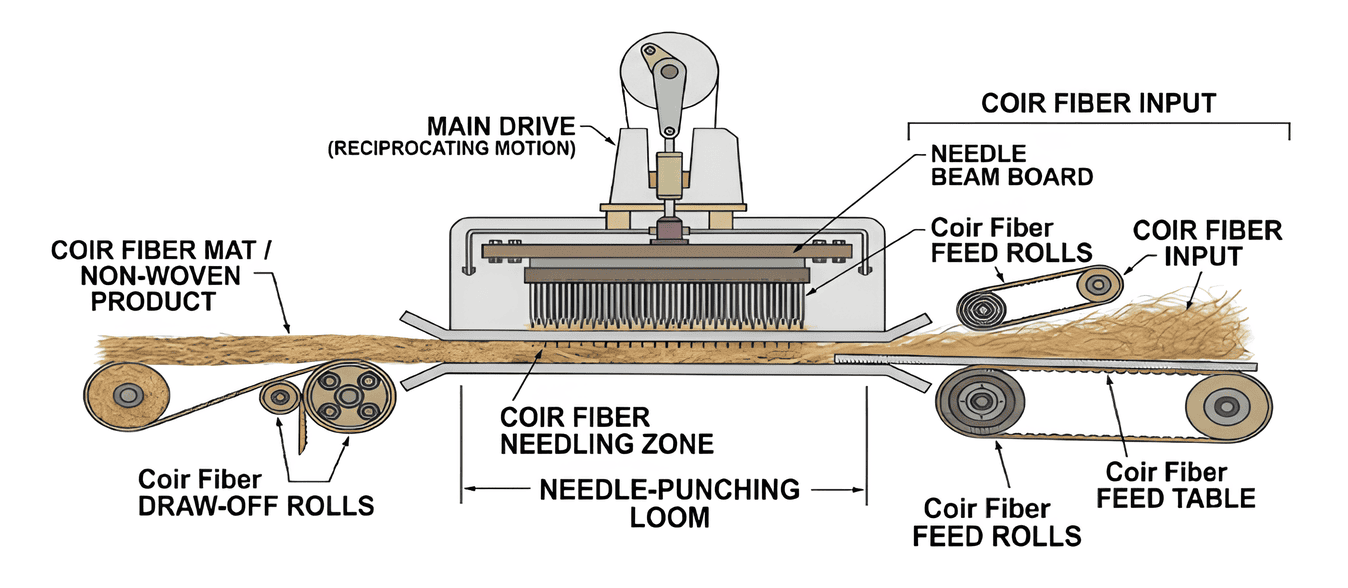
The main stage of the manufacturing process takes place inside the high-speed needle loom machine. A continuous sheet of fibers is fed into the punching zone, which is tightly clamped between a stripper plate and a bed plate. A needle board drives downwards; the sharp needles puncture through the thick layer of loose coco fiber.
As the needle board drives downward, the notches or barbs along its sides catch and interlock the coconut fibers. Repeated thousands of times per minute, this process creates an intricate 3D web structure through interfiber friction, which is the core of durable coco fiber insoles. - Finishing and Roll Winding
In the final stage, the dense coir fiber structure emerges from the needle loom as a continuous mat. Automated cutters then trim the edges to precise dimensions before the mat is wound into rolls or cut into custom sheets. Finally, the finished products are ready for distribution across various uses.
The Growing Potential of Eco-Footwear Market
The global transition toward eco-friendly solutions is rapidly transforming the footwear industry. Based on research from Business Research Insights, the global sustainable footwear market was valued at around USD 13.72 billion and is projected to reach USD 35.45 billion by 2035, growing at a Compound Annual Growth Rate (CAGR) of 11.12%.
This surge is largely driven by changing consumer behavior and global sustainability regulations. Over 68% of global consumers now prefer sustainable products, while over 41% of footwear brands are actively expanding their plant-based and bio-based materials, such as coco fiber insoles, to reduce reliance on Ethylene-Vinyl Acetate (EVA) and Polyurethane (PU).
Circular business strategies are creating opportunity for companies operating in the eco-friendly footwear sector. According to the research, over half (52%) of footwear brands have already launched an eco-innovation product collection on resource recovery and landfill reduction.
Moreover, transitioning from plastic materials to bio-based alternatives presents significant operational challenges. Companies must increase their R&D investment to enhance the material strength and long-term durability of these sustainable products. Therefore, scaling up materials from lab to commercial demands strict quality standards, a steady supply chain, proper handling, and stringent quality checks.
In addition, managing logistics to ensure a consistent supply of raw materials represents a distinct challenge for manufacturers. Seizing this opportunity, Arunika Natura steps in as a trusted industrial supply partner, maintaining high-capacity production of coco fiber while consistently upholding product quality.